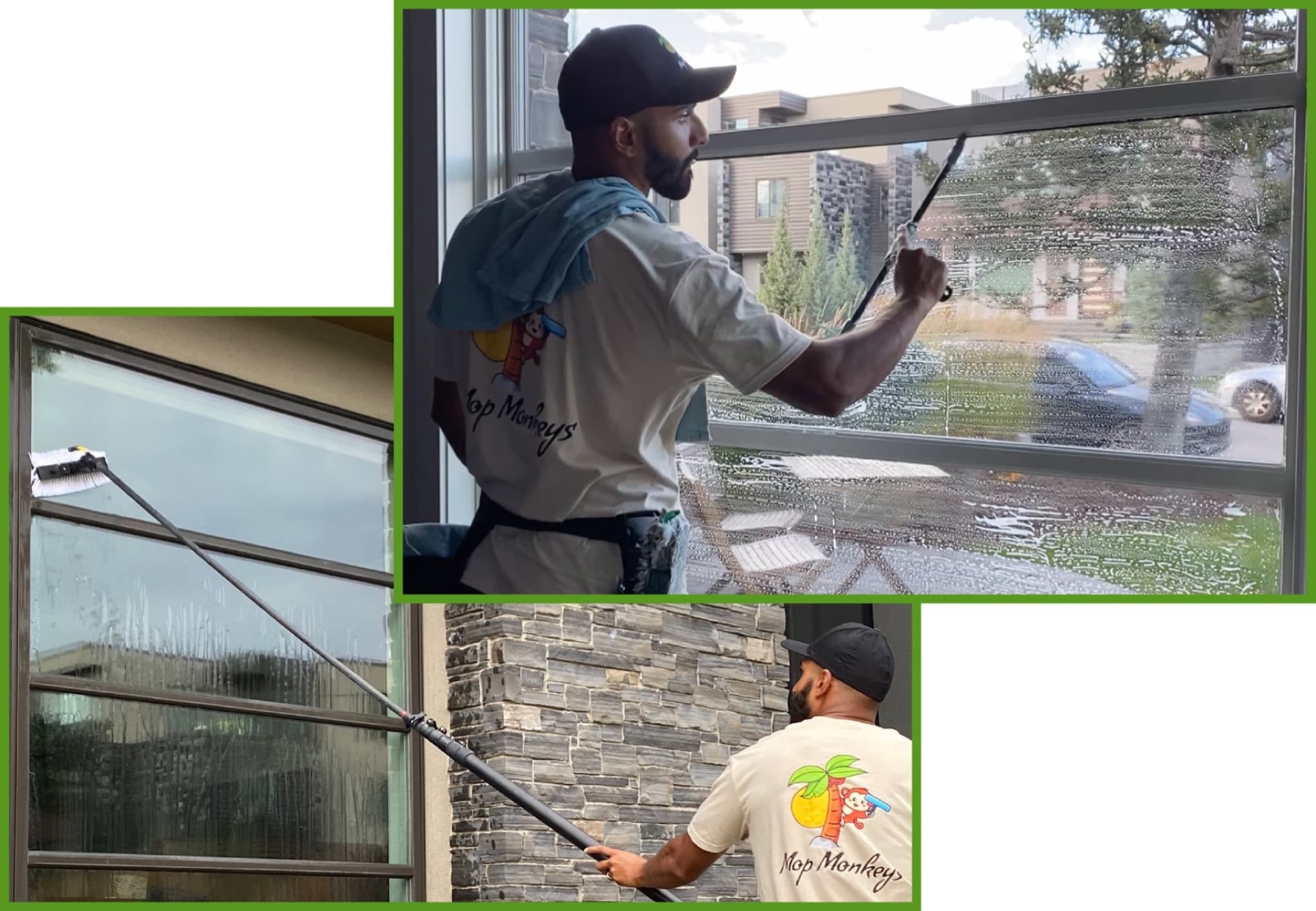

When people ask about pressure washing vs. soft washing, there's a common misconception worth clearing up: the difference isn't about which surfaces can or can't be cleaned with a pressure washer. A professional can pressure wash any surface. The difference is about technique — specifically, nozzle tip selection, distance from the surface, and whether cleaning solutions are added to the process.
Here's what every Calgary homeowner should understand.
It's Not About PSI — It's About Technique
Your pressure washer's PSI rating is just the machine's output. What actually matters at the surface is the *effective pressure* delivered — which is controlled by:
- Nozzle tip: A 0° tip concentrates all that force into a pinpoint. A 40° or 65° tip fans it out and dramatically reduces surface impact. Professionals carry a full set and choose the right one for every surface.
- Distance from the surface: Standing 12 inches away vs. 24 inches away makes an enormous difference in how much force reaches the material.
- Angle of approach: A direct 90° angle hits harder than a low sweeping angle.
An experienced operator adjusts all three in real time depending on what they're cleaning. The PSI number on the machine is largely irrelevant — technique is everything.
So What Is Soft Washing?
Soft washing is a specific technique that pairs low water pressure with biodegradable cleaning solutions. The solution does the heavy lifting — killing mold, algae, lichen, and bacteria at the root — while the low pressure rinses the surface without mechanical force.
It's the preferred approach for surfaces where organic growth is the main problem and where you want the cleaning agent to dwell and penetrate rather than just blast debris away. Common examples:
- Vinyl, aluminum, and stucco siding
- Roof shingles
- Wood decks and fences
- Fascia, soffits, and window frames
The key advantage: soft washing kills the organisms causing staining rather than just removing the surface-level discolouration. Results last longer as a result.
Where Pure Pressure Washing Shines
For surfaces where mechanical force is the most effective cleaning agent — where you're stripping built-up grime, oil, mineral deposits, or debris rather than treating organic growth — pressure washing at closer range with the appropriate tip is the right call:
- Concrete driveways, walkways, and patios
- Patio stones and pavers
- Brick and stone
- Garage floors
- Metal railings and fences
Where DIYers Get Into Trouble
Damage from pressure washing almost always comes down to operator error — not the pressure washer itself. The most common mistakes:
Wrong nozzle tip: Using a narrow tip on vinyl siding or wood at close range concentrates too much force and can crack, splinter, or force water behind panels.
Too close, too direct: Getting the wand too close to any surface without adjusting the tip or angle can cause damage that a wider tip and proper distance would completely avoid.
Skipping the cleaning solution: Blasting algae and mold off a surface with pure pressure removes the visible staining but leaves the organism behind. It grows back faster. Adding the right solution and letting it dwell is the professional approach.
This is why hiring an experienced operator matters. It's not about what machine they show up with — it's about knowing how to use it.
Calgary-Specific Exterior Cleaning Challenges
Efflorescence on concrete: That white chalky residue on driveways and retaining walls is mineral deposits from water moving through concrete. Pressure washing removes it effectively, and a mild acid wash helps with heavy buildup.
Algae and lichen on north-facing walls: Calgary's north exposures stay damp and shaded. Green algae and black lichen accumulate quickly on siding, fascia, and roof overhangs. Soft washing with a biocidal solution kills these at the root and keeps them from coming back quickly.
Road salt residue: Winter salt spray lands on lower siding panels, basement windows, and garage doors. Spring pressure washing removes this corrosive buildup before it causes long-term damage.
Wildfire smoke residue: Smoke from BC wildfires leaves a fine grey film on Calgary homes, particularly on light-coloured siding. Soft washing with a surfactant solution lifts this effectively without disturbing the siding.
How Often Should You Wash Your Calgary Home?
Driveway and walkways: Every 1–2 years, or when you notice staining or organic growth.
Siding: Every 2–3 years for most Calgary homes. More frequently if you're near trees, construction sites, or a busy road.
Deck: Every 1–2 years, followed by a deck sealer application.
Gutters and soffits: When you see staining, or as part of your annual gutter cleaning service.
Get a Free Quote from Mop Monkeys
Mop Monkeys offers professional exterior cleaning throughout Calgary and surrounding areas. We assess every surface and apply the right technique — whether that's high-pressure work on concrete, soft washing siding, or a combination approach for a full exterior clean.
Call us at 403-477-0895 for a free same-day quote. Most homes can be quoted over the phone.

Mop Monkeys
Calgary's family-run window cleaning, gutter cleaning & pressure washing company. 68+ 5-star reviews.